ACA Subsidy Cliff 2026
The ACA Subsidy Cliff Is Back: What It Means for Your 2026 Bill
If your marketplace premium jumped this year, it is not just rate increases. The way ACA subsidies are calculated changed on January 1, 2026, and for self-employed people the change is bigger than most coverage of it explains. Here is the actual mechanics of what happened, with numbers.
What expired, exactly
From 2021 through 2025, the marketplace ran on enhanced premium tax credits (introduced by the American Rescue Plan and extended through 2025 by the Inflation Reduction Act). They did two things:
- Lowered everyone's expected contribution. Your subsidy is the gap between the benchmark Silver premium and a set percentage of your income. The enhanced credits shrank those percentages at every income level, down to 0% at lower incomes and capped at 8.5% of income at the top.
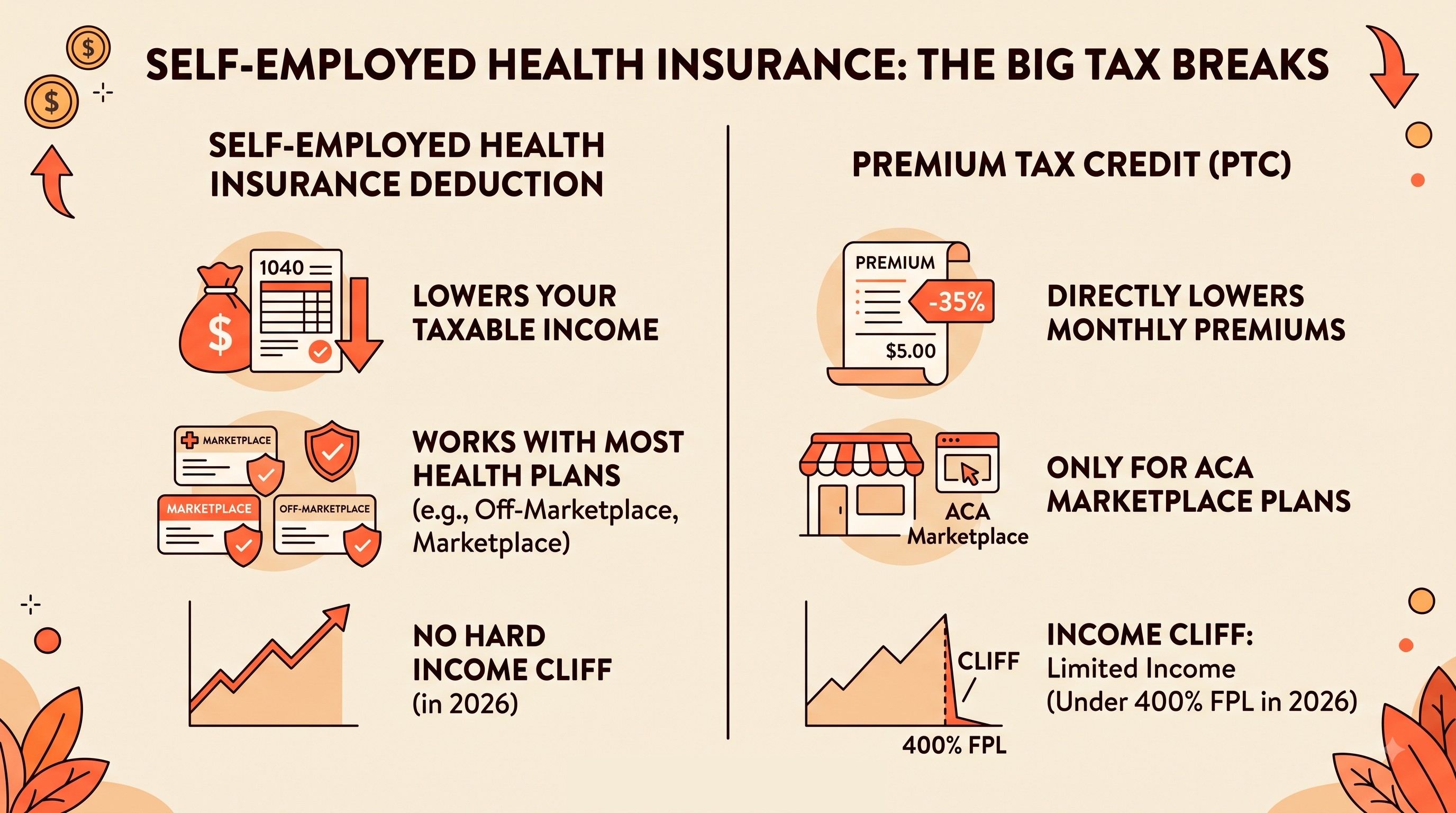
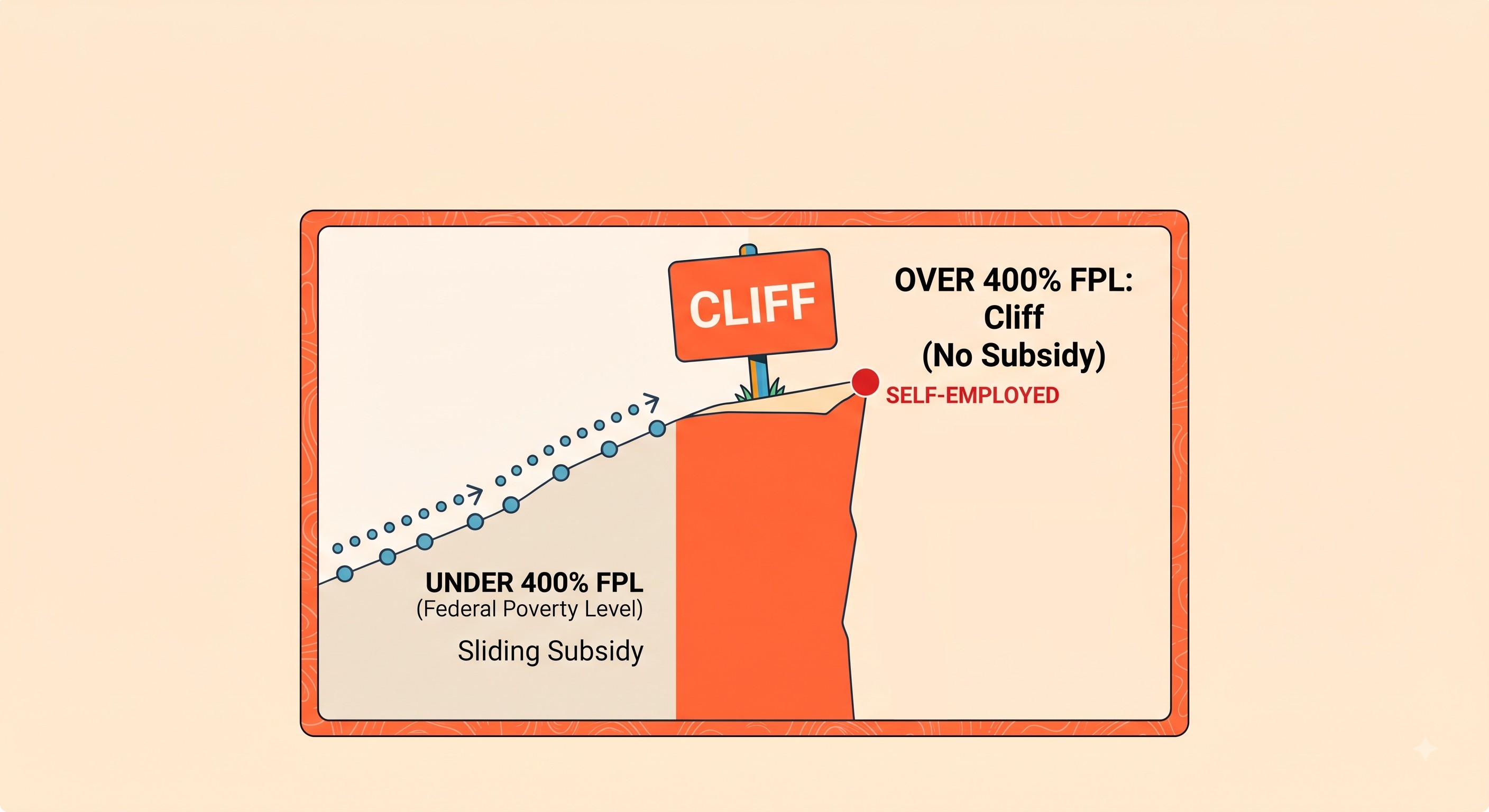
- Removed the income cliff. Before 2021, subsidies stopped completely above 400% of the federal poverty level. The enhanced credits deleted that cutoff: no matter your income, you never paid more than 8.5% of it for the benchmark plan.
Both provisions expired on December 31, 2025. For 2026, the rules snapped back to the original ACA formula.
The two changes hitting your bill
1. The 400% cliff is back
For 2026, if your household income is above 400% of the federal poverty level (roughly $62,600 for a single person, about $128,600 for a family of four), your subsidy is zero. Not reduced. Zero.
This is a cliff, not a slope. Earn one dollar over the line and the entire credit disappears. A 60-year-old couple just over the threshold can see their premium jump by hundreds of dollars a month compared to a couple earning slightly less.
Self-employed people are hit hardest for two reasons: 1099 income commonly lands above the threshold, and it swings, so you can budget for a subsidy in March and lose it by December when your actual income reconciles on your tax return.
2. Everyone below the cliff pays a bigger share
Even if you still qualify, the sliding scale reverted. Instead of contributing 0% to 8.5% of income, enrollees now contribute roughly 2% to nearly 10%, depending on income. KFF estimates that out-of-pocket premium payments for subsidized enrollees roughly double on average in 2026.
And the sticker prices went up at the same time
Separately from the subsidy change, insurers raised 2026 rates sharply. The average benchmark premium rose about 26% to roughly $625 per month for a 40-year-old, per Peterson-KFF. So unsubsidized buyers face both a higher sticker price and no credit to soften it.
A worked example
A 45-year-old freelance consultant earning $75,000:
- 2025: premium capped at 8.5% of income. Maximum benchmark cost about $531 per month, with the credit covering the rest.
- 2026: income is above 400% FPL, so no credit. She pays the full benchmark premium, about $706 per month at her age, and more in high-cost states.
That is roughly a $2,100 per year increase with no change in her income, plan, or health.
What you can do about it
Reconcile carefully. If your income might cross the 400% line, remember subsidies are reconciled on your tax return. Underestimating income can mean paying credits back at tax time.
Re-shop instead of auto-renewing. Your real post-subsidy price this year may look nothing like last year's. Check the actual 2026 number.
Take the tax deduction you do control. Most self-employed people can deduct health premiums via the self-employed health insurance deduction, regardless of whether a subsidy applies. It is not a credit, but it lowers taxable income. (Talk to a tax professional.)
Compare off-marketplace options. If you are above the cliff, the subsidy question is moot, and the comparison becomes plan versus plan on price and benefits. That is where Molli is built to compete: an ACA-compliant major medical plan for 1099 and self-employed workers with flat, transparent pricing that can save up to 30% vs. ACA marketplace plans¹, plus $0 virtual primary care and $0 generic prescriptions through Vitable, and year-round enrollment. Molli is sold off the marketplace, so it never depended on subsidies in the first place; your price is your price.
For a short action checklist, see our guide: ACA subsidies are ending: what self-employed workers need to do.
Frequently asked questions
Did ACA subsidies end completely in 2026? No. The enhanced pandemic-era credits expired on December 31, 2025. The original, smaller income-based credits remain, but the 400% of poverty income cutoff is back, and contribution percentages rose at every income level.
What is the ACA subsidy cliff? Above 400% of the federal poverty level (about $62,600 for one person in 2026), you get no premium tax credit at all. One dollar over the line eliminates the entire subsidy, which is why it is called a cliff.
How much did 2026 marketplace premiums go up? The average benchmark Silver premium rose about 26% to roughly $625 per month for a 40-year-old, before any subsidy. Subsidized enrollees' own payments roughly doubled on average because the enhanced credits also expired.
What can self-employed people do if they lost their subsidy? Re-shop rather than auto-renew, use the self-employed health insurance deduction, and compare off-marketplace plans built for independent workers, like Molli, where pricing does not depend on subsidies.
¹ Savings vary by location, age, and plan selection. Based on comparison of Molli Pro plan rates to ACA Silver benchmark premiums.